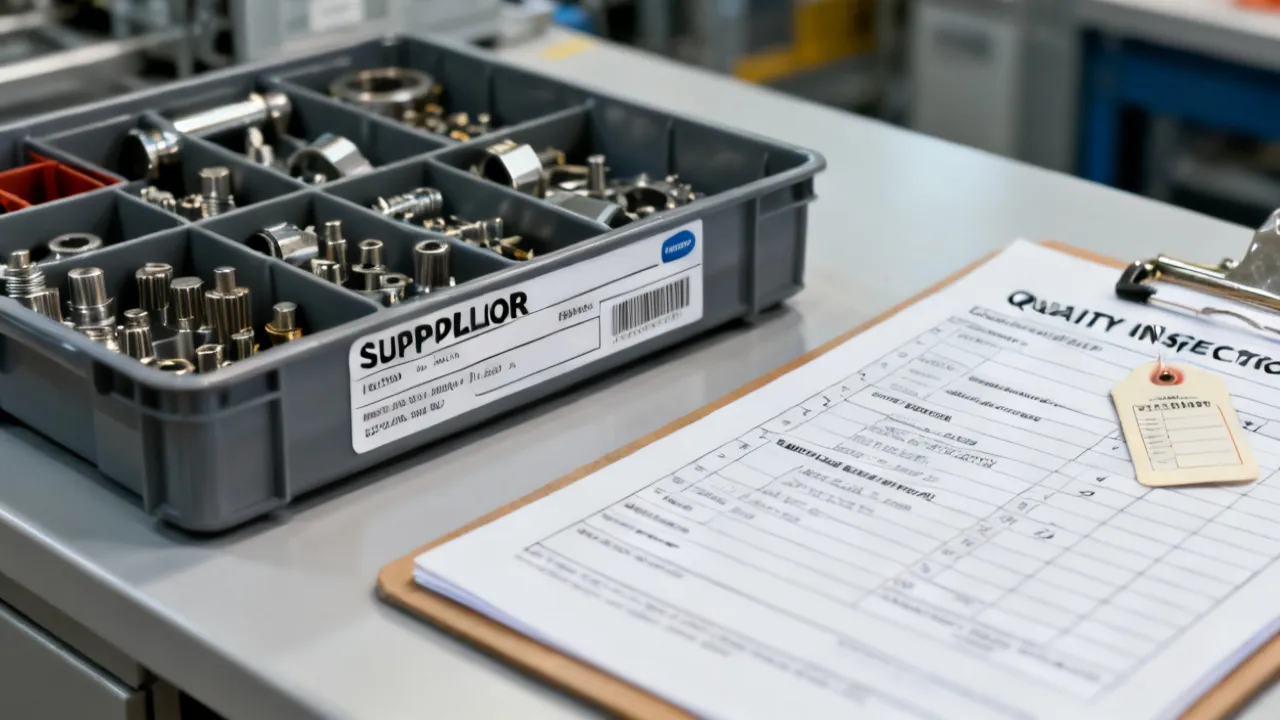
Understanding Identifier 20011983 in Supply Procurement
This guide explains how to interpret the identifier 20011983 in procurement workflows, what it typically signals for suppliers and buyers, and how to verify matching documentation. Background context is provided on identifier-based purchasing, data integrity, and why consistent supplier records matter across industries, using neutral criteria and practical steps to support compliant, traceable sourcing.
1) What “20011983” Usually Means for Procurement Decisions
The identifier 20011983 commonly functions as a catalog, lot, internal reference, or transaction code within purchasing systems. In practice, its value lies in traceability: it can link a supplier’s offer, product documentation, shipping batch details, and inspection records—reducing ambiguity when multiple similar items or revisions exist. When buyers evaluate quotations, they often rely on these codes to confirm that the correct specification set is being sourced, especially when the same category of goods can vary by version, material, or compliance status.
Procurement environments rarely operate with only one “source of truth.” Instead, they depend on a network of documents: the request for quotation (RFQ), the supplier’s quotation, the purchase order (PO), shipping documents, receiving logs, quality inspection results, and the invoice. In such settings, an identifier like 20011983 becomes more than a convenient label; it becomes the bridge that aligns intent (what was requested and agreed) with execution (what was shipped, accepted, and billed).
However, the code itself is usually only meaningful when paired with context—such as the supplier name, the described item/part, the relevant documentation (e.g., technical sheets), and purchase terms. A procurement guide focused on 20011983 therefore needs to emphasize how to validate that context rather than assume that the identifier automatically guarantees correctness. This is also why the procurement reality reflected in the original text matters: the “top price” is not always the safest outcome if the underlying reference mapping is inconsistent across documents.
To make this practical, consider what procurement teams experience when they cannot clearly map an identifier. Even when a supplier’s product seems “close,” the buyer might receive an item with the same general category but a different revision level, compliance marking, or production lot. In regulated or safety-critical sectors, that difference can be consequential. Even in non-regulated settings, it can still lead to rework, downtime, warranty claims, or customer dissatisfaction. In other words: the identifier is valuable, but its value depends on whether the buyer can verify that the identifier means the same thing everywhere it appears.
In many organizations, codes like 20011983 are stored in enterprise systems (ERP), procurement platforms, supplier portals, or spreadsheets. These systems may have fields such as “Material Number,” “Supplier Part Number,” “Item Description,” “Revision,” “Batch/Lot,” “Document Reference,” and “Catalog Reference.” The identifier 20011983 might populate one of those fields—or might be referenced in notes and attachments rather than the primary “part number” field. Therefore, procurement decisions often hinge on whether the buyer’s team understands where 20011983 is supposed to sit inside their data model.
Finally, it is important to recognize that identifiers can behave differently across supplier types. A manufacturer might use a stable internal part number; a distributor might use a catalog number that maps to a manufacturer’s part; a service provider might use an internal transaction code that ties to a specific scope of work. None of those uses are “wrong,” but they each require different verification approaches. So the procurement objective remains the same: validate mapping, validate consistency, validate documentation.
2) Buyer-Focused Importance: Price, Supplier Records, and Verification
Even when price information is presented clearly, the buyer’s risk often depends on whether the quotation, invoice, and delivery paperwork align with the identifier 20011983. In supplier negotiations, experienced procurement teams treat reference codes like 20011983 as a consistency check across documents rather than as a guarantee by themselves.
To see why, imagine two quotations that appear similar: both provide a unit price that looks favorable, and both include an item description that seems to match the buyer’s needs. Yet if one quotation ties the price to 20011983 while the other quotation ties it to a different internal revision code—or if the PO later captures a slightly different version tag—the buyer might later receive a product that is technically different. This mismatch can be hard to detect at the time of purchase unless the procurement team uses a method that ensures alignment across the document chain.
From an industry-expert perspective, three validation questions typically matter very:
- Does the supplier’s quote explicitly map the identifier to the exact item/specification?
- Do delivery and invoice documents reproduce the same identifier without mutation (spelling, spacing, version tags)?
- Is there traceable documentation (technical files, compliance statements, inspection records) that can be tied back to 20011983?
When these checks hold, procurement teams can reduce downstream issues such as incorrect substitutions, late document delivery, and compliance gaps. When they do not hold, buyers face a classic procurement problem: evidence is fragmented. The buyer may have a part that “fits” physically but does not match the technical requirements, or a delivery note that “matches” the identifier but whose revision paperwork is missing. In either case, the risk is not simply financial; it is operational and often quality-related.
Consider also that invoices can contain their own quirks. Some suppliers invoice using a different reference format than they used in the quotation or shipment documents. For example, a supplier might invoice by a billing code, while the PO line uses a part number. Or they might include a packing slip reference that is close but not identical. If the buyer does not verify that the invoice reference correctly maps back to 20011983, the buyer may accept an invoice that is “technically payable” in the system but inaccurate from a traceability standpoint.
Another procurement issue is data entry drift. In some organizations, buyers or coordinators manually type identifiers into an ERP system. Human error can introduce a space, drop a leading zero, or alter a format (for instance, entering “20011983” as “2001198 3” or “20011983-1” when the supplier uses the pure numeric form). These small differences can break traceability. That is why the verification stage should include not just confirming that the identifier exists, but confirming that the identifier is exactly consistent across documents and systems.
It is also worth noting that procurement teams frequently adopt internal policy language to manage these risks. For example, many policies state that a PO line must include supplier part number and revision. Some specify that delivery documentation must include the same supplier part number and the same revision, and that invoices must reference the PO number and line item. The identifier 20011983 typically becomes the key to enforce these internal policy rules.
Lastly, verification is not only defensive. It can improve supplier relationships and negotiation outcomes. When buyers ask for a clear mapping, suppliers often respond with more structured quotations and attachments. This reduces rework for both parties. Over time, suppliers who understand that buyers require robust identifier mapping become easier to work with—and they may even offer better pricing structure due to fewer clarifications and fewer disputes.
3) How Identifier-Based Sourcing Works Across Industries
Identifier-driven procurement is widely used because it supports structured data flows. Whether the goods involve industrial components, materials, packaging, or service deliverables, organizations need a mechanism to connect business decisions to operational execution.
At a neutral level, codes like 20011983 can serve multiple roles:
- Catalog reference: indicates a standard item entry in a supplier’s system.
- Lot/batch reference: indicates production grouping for traceability.
- Internal purchase transaction code: indicates a record for audit trails within buyer systems.
- Revision reference: indicates that the item corresponds to a particular version of a specification or drawing set.
Regardless of which role it plays, the key is consistency. Buyers benefit when the identifier remains stable across procurement documents and when it is backed by documentation that explains the item’s characteristics.
To understand why this matters across industries, it helps to examine how procurement differs by sector.
Industrial manufacturing often relies on part numbers and revision levels. A component might appear identical from a distance, but a revision change can affect material properties, tolerances, or compatibility with downstream assemblies. If 20011983 is a revision marker in that sector, then the buyer’s verification must include evidence that the revision corresponds to the desired specification drawing.
Pharmaceuticals and healthcare add complexity because traceability and compliance documentation (e.g., certificates of analysis, validation records) become essential. In these contexts, 20011983 might be a batch number or a manufacturing lot identifier. Here, mapping 20011983 to the correct batch documentation is often as important as mapping it to the product name.
Construction and infrastructure may involve product codes tied to certifications, standards, or approved vendor lists. A code like 20011983 might correspond to a specific performance standard or a material grade. Procurement teams in this industry frequently focus on whether the code ties to a certificate and whether the certificate matches the delivery.
Technology and electronics often include supplier part numbers, manufacturer part numbers, and sometimes alternative component codes due to supply chain substitutions. In such cases, 20011983 might be a cross-reference that needs careful validation to ensure that the delivered component meets the exact spec required by the design. If substitutions occur, procurement teams need to be very explicit about which identifier is authorized.
Services procurement is sometimes overlooked, but identifiers still matter. A service provider might use an internal job code that corresponds to a scope of work. If 20011983 is the internal job code, then invoices and delivery/acceptance records must reference that code accurately to show that the buyer received what they contracted for.
Across all these sectors, the same underlying principle applies: an identifier supports data integrity, but only verification ensures that data integrity is real. Without verification, an identifier can become a false sense of certainty—especially when documents are produced in different systems or by different departments.
Therefore, procurement best practices emphasize that identifier-based sourcing is not just “record keeping.” It is a method to reduce mismatch risk, support audit trails, and enable efficient resolution of disputes. If a dispute arises—such as a claim that the delivered goods were not the contracted goods—the procurement team needs to demonstrate which identifier was ordered, which identifier was delivered, and which documentation was used to accept the goods.
4) Evaluation Criteria: Ensuring 20011983 Matches the Right Goods
To use an identifier responsibly, procurement teams generally evaluate matching through a document triangulation method. Instead of relying on a single document (for example, only the quotation), they cross-check between:
- Quotation: should reference the same identifier and describe the item/specification.
- Purchase order: should carry the identifier as entered and lock the specification set.
- Delivery documentation: should repeat the identifier and include lot/shipping references if applicable.
- Receiving inspection records: should reference the same identifier to tie acceptance to the right unit(s)/batch.
This approach supports audit-readiness. It is also a practical defense against a common failure mode: a supplier quoting one reference while shipping or invoicing another that appears “similar” but is not identical in revision or compliance posture.
Document triangulation works because each document type serves a different role in the procurement lifecycle:
- The quotation captures what the supplier believes they are offering and what they think the price covers.
- The purchase order represents what the buyer actually agrees to buy and locks the contractual basis.
- The delivery documentation reflects what was physically prepared and shipped.
- The receiving and inspection records provide evidence that the buyer accepted those goods as matching the specification requirements.
If all four align on 20011983, procurement can usually proceed confidently. If not, procurement must treat the discrepancy as a potential root-cause rather than a superficial error. For instance, a mismatch between quotation and PO might indicate internal buyer data entry issues or supplier quotation line misalignment. A mismatch between PO and delivery might indicate substitution (intentional or accidental) or mislabeling at packaging. A mismatch between delivery and inspection might indicate that inspection sampled different units than assumed, or that the inspection documentation system was updated incorrectly.
It is also useful to define what “matches” means. For numeric codes like 20011983, a match might mean:
- Exact string match, including leading zeros or suffixes (if any).
- Matching version tags or revision indicators, if present.
- Matching specification references attached to the code, not just the code itself.
In some systems, 20011983 might appear in multiple fields. For example, it might appear as a “Catalog Number” while the PO specification references a drawing number separately. Even if the catalog number matches, the drawing revision might not. Therefore, procurement evaluation criteria should not assume that one identifier fully captures technical compliance. Instead, procurement should treat 20011983 as the anchor for linking the documents, while also verifying that the underlying specifications—drawing numbers, test standards, material grades, or compliance requirements—are correct.
Procurement teams also need to consider partial deliveries. Suppose a single PO line is split into two shipments. If the supplier uses multiple lots or batches, 20011983 might vary by shipment. In that case, “matching” might mean that the PO line tolerates batch variability but requires correct lot-specific documentation. Procurement should clarify this at the PO stage to avoid confusion. Without clarity, buyers might treat any change in 20011983 as an error, even when it is expected due to lot changes.
Another evaluation factor is the role of substitution clauses. Some contracts allow substitutes if the supplier can provide evidence that the substitute meets the requirements. If such clauses exist, procurement must define whether substitutions require a new identifier, whether the buyer must approve, and whether the acceptance criteria depend on 20011983 or on the spec compliance evidence.
In summary, evaluation criteria revolve around triangulation and clearly defined matching rules. For an identifier like 20011983, procurement should aim to confirm that the same reference anchors the entire chain from quotation to acceptance, and that supporting documentation aligns with the specification intent.
5) Supplier Due Diligence: What to Ask Without Making Assumptions
Even when supplier details are provided, responsible buyers verify the underlying mapping between 20011983 and the item description. A well-structured inquiry typically requests:
- Specification sheet or technical documentation that explicitly corresponds to the identifier.
- Revision or effective date information (when the supplier uses versioning).
- Traceability evidence such as batch/lot documentation if the goods are subject to inspection or regulatory requirements.
- Packaging and labeling standards expected for that identifier (important for receiving and warehousing).
By asking these items in a neutral, documentation-oriented way, buyers avoid unnecessary friction while still protecting quality and compliance objectives.
Supplier due diligence is often more effective when structured as “evidence requests” rather than as “interpretation challenges.” For instance, instead of asking, “What does 20011983 mean?”—which might force the supplier to guess what the buyer’s internal system expects—buyers can ask, “Please provide the specification and the revision tied to 20011983 as you quote it to us.” This encourages the supplier to respond with specific attachments and mapping notes.
To make due diligence even more practical, buyers can incorporate conditional questions. For example, “If 20011983 refers to a lot number, please include the lot traceability document for the lot being shipped.” Or “If your catalog reference links to a manufacturer part number, please provide that manufacturer part number and the revision you will ship under PO acceptance.” These conditional requests reduce the chance that the buyer receives generic information not tied to the specific code.
Another nuance is that suppliers might use identifiers differently across product lines. A supplier could use 20011983 for one product category as a catalog code and for another category as a revision reference. Therefore, due diligence questions should be specific to the described item category and to the exact line item being quoted.
Buyers also need to consider whether the supplier operates under a quality management system that supports documentation control. If the supplier has ISO-aligned processes, the supplier will often be able to provide controlled revision documentation and certificates. But even if the supplier is not formally certified, buyers can still request traceability evidence and controlled documentation references tied to 20011983.
Packaging and labeling standards can be surprisingly important for procurement. Receiving teams frequently depend on labels to verify that the correct item arrived, and warehousing teams depend on labels for storage and picking accuracy. If labeling does not reflect the correct identifier, then even a correct shipment can become operationally problematic. Therefore, asking for labeling expectations—what exactly appears on the label, whether the label includes the code 20011983, and how batch/lot markers appear—is a form of due diligence that protects both logistics and quality.
In some industries, labeling requirements are tied to regulatory obligations. For instance, certain goods require specific marking formats, test-report references, or traceability codes. If 20011983 is part of those markings, then mapping verification is not optional. Buyers should ensure that the supplier’s packaging matches the agreed traceability method.
Finally, procurement due diligence should include clarity on document version control. When suppliers provide technical sheets, buyers should verify whether the sheet corresponds to the revision linked to 20011983. If a supplier provides an old sheet by mistake, the buyer might accept a mismatch that only surfaces later during inspection or customer audits. The “what to ask” list should therefore include a request for the revision level and effective date of the attached documents.
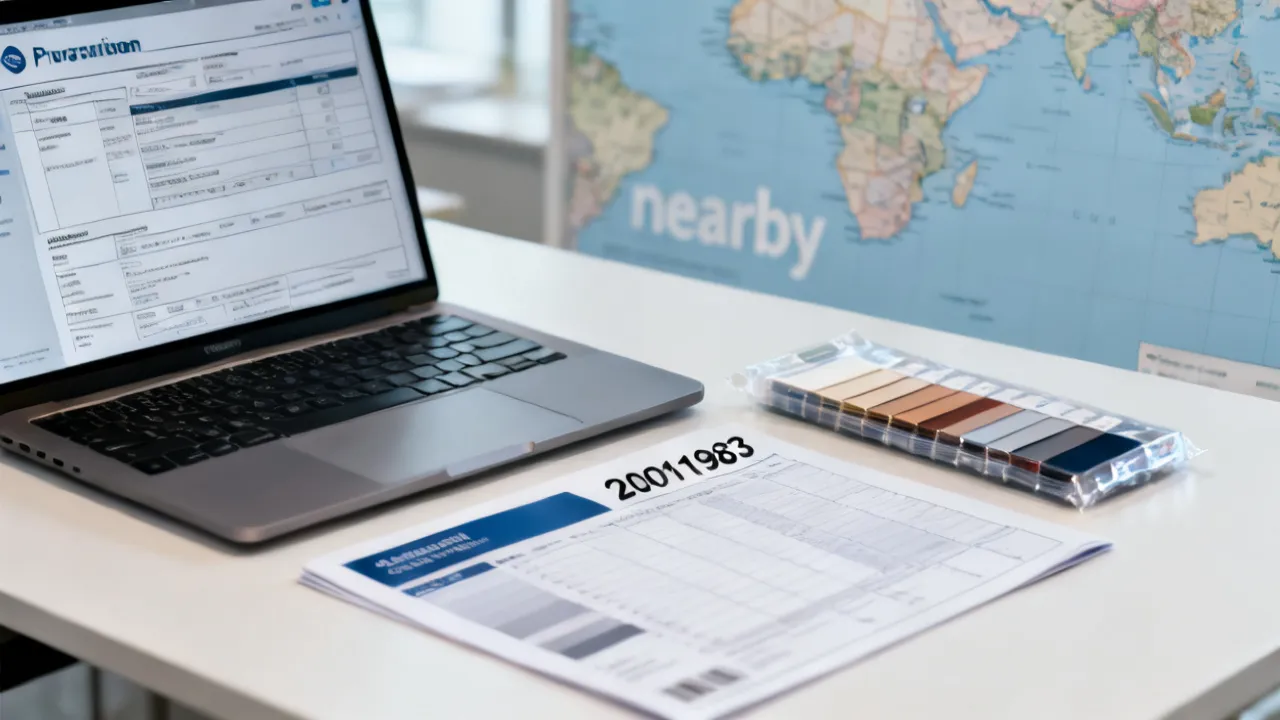
6) Where “Nearby” Localization Fits Into Procurement Practice
When the input includes location-related placeholders, the term is treated as “nearby” in this guide. In real procurement workflows, “nearby” procurement often affects lead times, receiving schedules, and communication cadence. However, the identifier check remains unchanged: regardless of whether the supplier is “nearby” or geographically distant, the linkage between 20011983 and the correct specification must be verified.
Procurement teams sometimes assume that local suppliers are easier to manage and less likely to mislabel shipments or provide incorrect documentation. While proximity can indeed reduce time-to-response, it does not eliminate the underlying risk of identifier mismatch. Data errors can occur at any point: during quotation line configuration, during PO mapping, during packaging label generation, or during invoice line coding. Proximity may shorten the time it takes to correct those errors, but it does not change the need for verification.
“Nearby” procurement can also influence inspection methods. If the supplier is close to the buyer’s facility, buyers might arrange expedited receiving inspections or even pre-shipment reviews. This can create more operational visibility. For example, a receiving team might request that the supplier deliver sample units or coordinate a preliminary labeling verification. In that scenario, the identifier 20011983 becomes part of the pre-shipment checklist rather than solely a post-delivery verification artifact.
Even when buyers can communicate quickly, it is still essential to keep decisions evidence-based. A quick phone call might clarify what 20011983 means, but without written evidence (such as updated quotation attachments, revised delivery notes, or a signed mapping statement), the buyer’s audit trail remains weak. Thus, “nearby” procurement is best treated as an advantage for speed, not as a substitute for evidence.
Another aspect is that “nearby” procurement can affect scheduling and partial deliveries. If a supplier delivers frequently, the buyer might receive goods in smaller batches. That can increase the frequency with which 20011983 appears on delivery documents, raising the importance of automated checks and standardized receiving procedures to prevent human error. Buyers who are aware of this often invest in scanning workflows and system validations that match 20011983 exactly as required.
Finally, for buyers who manage multiple sites, proximity can lead to different local purchasing practices. One site might treat 20011983 as a lot code; another site might treat it as a catalog reference. Without consistent cross-site guidance, this can create internal confusion. Therefore, regardless of proximity, buyers benefit from internal standard operating procedures that define how identifiers should be interpreted and verified within the organization.
In summary, “nearby” localization changes the operational tempo but should not change the verification logic. The buyer should still confirm mapping, enforce identifier consistency across documents, and ensure receiving and inspection records tie back to 20011983.
7) Comparison Table: Verification Options and Practical Conditions
Below is a supplemental comparison of common ways procurement teams handle identifier-based sourcing. It is presented as a neutral decision-support table and does not assume any single supplier practice.
| Verification Method | When It’s Useful | Conditions/Requirements | Expected Outcome |
|---|---|---|---|
| Document triangulation (quote ↔ PO ↔ delivery ↔ receiving) | When multiple revisions or similar SKUs exist | Each document must reproduce 20011983 accurately and include a consistent description/spec reference | High traceability and audit-ready linkage |
| Supplier mapping confirmation (ask supplier to confirm identifier meaning) | When the buyer is new to a supplier or a code system | Supplier must provide written mapping details (catalog/lot/revision role) tied to 20011983 | Reduced risk of misinterpretation |
| Incoming inspection cross-reference | When quality acceptance depends on batch/lot or spec revision | Receiving team records must reference 20011983 (and lot/batch if applicable) | Clear acceptance evidence by identifier |
| Compliance documentation check | When goods must meet standards/regulatory requirements | Compliance statements or test reports must align to 20011983 and the correct revision | Lower compliance uncertainty |
To further make this table actionable, consider typical procurement “edge cases” and how these methods apply:
Edge case 1: Supplier uses multiple identifier fields. A supplier may provide 20011983 as a catalog reference in one document but use it as a batch reference in another. Document triangulation helps detect the inconsistency, while supplier mapping confirmation helps clarify the correct interpretation.
Edge case 2: Delivery note correct, invoice code different. This can happen when suppliers invoice by a billing system that is not aligned to the shipping system. In such scenarios, procurement should still require that the invoice references the PO line item and that it can be traced back to 20011983 and the shipped quantities.
Edge case 3: Compliance certificates missing. If the goods require regulatory compliance evidence, buyers should not rely only on identifiers. Compliance documentation checks ensure that even if 20011983 matches, the certificate corresponds to the correct revision and lot/batch.
Edge case 4: Partial shipments with lot variability. If 20011983 represents a lot number, then a PO may legitimately produce multiple lot identifiers across deliveries. Procurement should align expectations: the PO might reference a range of potential lots or require that each lot delivery includes its own traceability documentation. Incoming inspection cross-reference then becomes critical.
In general, procurement teams often combine methods. For example, they might do triangulation for baseline verification and then use supplier mapping confirmation when discrepancies appear. This layered approach increases confidence without overburdening suppliers unnecessarily.
8) Step-by-Step Guide: Using 20011983 in a Compliant Procurement Workflow
The following step-by-step guide is designed to help buyers operationalize identifier-based purchasing. It is written as general top practice and should be adapted to internal policy and industry standards.
- Capture context at request stage: record the item description, intended use, specification requirements, and the identifier 20011983 as provided by the requester or supplier.
- Require explicit mapping in quotations: request that the supplier state how 20011983 relates to the specific item/spec/revision being quoted.
- Validate pricing correspondence: confirm that the price line items correspond to the identifier (not a generic category). If multiple references exist, ensure the quote breaks out each one clearly.
- Issue purchase order with locked identifier fields: ensure 20011983 is entered exactly as required by the supplier format. Avoid manual reformatting that could alter the reference.
- Set receiving check rules: instruct receiving personnel to verify the identifier on delivery paperwork and—when applicable—on labeling/packaging.
- Perform document acceptance review: confirm delivery notes, packing slips, and invoice details align with 20011983.
- Link inspection outcomes: record inspection results with the identifier, so traceability is maintained even if a claim is needed later.
- Maintain an audit log: store correspondence demonstrating that 20011983 was correctly interpreted and accepted for that transaction.
- Handle discrepancies systematically: if documents conflict (e.g., identifier mismatch or unclear mapping), pause acceptance and request clarification or corrective documentation before closing the record.
To make each step more concrete, procurement teams can apply additional internal controls and documentation habits. These practices often reduce variation between people and between sites:
Step 1 elaboration: context capture. When capturing context, include not only the identifier but also the “where it came from.” For example, note whether 20011983 came from an engineering change order, a supplier catalog, a previous PO history record, or a requester’s internal specification sheet. If the source is unknown, ask for evidence. This helps determine the likelihood that 20011983 might be ambiguous or represent different code systems.
Step 2 elaboration: mapping language in RFQs. Buyers can require that supplier quotations include a line that states, in plain language, “20011983 corresponds to [item name], revision [x], lot/batch [y if applicable], and [technical reference].” The purpose is not to force a specific format but to ensure that the supplier ties the identifier to the technical reality.
Step 3 elaboration: price line item structure. If quotes include lump pricing (e.g., “price includes parts, handling, and documents”), procurement may struggle to verify which portion relates to 20011983. A better practice is to structure quote line items so that each identifier or each specification set has a corresponding price breakdown. This supports later reconciliation with invoices and receiving quantities.
Step 4 elaboration: PO field discipline. In ERP systems, identifier fields may have length limits, allowed character sets, or formatting rules. Buyers should verify that the ERP field can accommodate 20011983 without truncation. For example, if the ERP “Part Number” field is too short, the code might be truncated, creating a mismatch. The solution is to validate field mapping in advance or use an appropriate alternate field.
Step 5 elaboration: receiving workflows. Receiving teams typically process documents quickly. To reduce mistakes, buyers can implement receiving checklists that require scanning the identifier 20011983 and comparing it to the PO line. If barcodes exist, scanning can improve reliability. If barcode scanning is not possible, receiving staff can be instructed to verify the identifier directly from the label and from the delivery note.
Step 6 elaboration: invoice review. Invoice acceptance should include a reference check. Even if invoices do not list the identifier in full, they should provide enough traceability to map to the PO line and to the delivered quantities. Buyers may need to require invoice line item references that support traceability to 20011983.
Step 7 elaboration: inspection sampling. Inspection procedures should define how samples are selected and recorded. If an inspector samples a unit that belongs to a different lot than assumed, the inspection record might not properly correlate with 20011983. Therefore, inspection records should include the identifier and, when applicable, a lot/batch reference.
Step 8 elaboration: audit log structure. Audit logs should capture evidence that demonstrates correct interpretation. For example, store the supplier’s mapping statement, the quotation line, the PO screenshot showing 20011983, and the receiving note showing the same identifier. When disputes arise, this evidence becomes critical.
Step 9 elaboration: discrepancy handling. When documents conflict, buyers should clearly define escalation steps. For instance, if 20011983 differs between PO and delivery, receiving may hold goods. Procurement may request corrective documentation. Quality may check whether the shipped item meets the specification. The key is to avoid closing the record until mapping is resolved and evidence is updated.
9) Industry Expert Perspective: Why “Correct Mapping” Beats “Top-Looking Quotes”
From an operations and procurement standpoint, many problems are not caused by the absence of data, but by the presence of inconsistent data. Identifier systems like 20011983 are intended to prevent mismatch—yet they only work when humans and systems enforce consistent mapping.
An expert-level procurement approach typically treats identifier validation as part of risk management:
- Operational risk: wrong item or wrong revision can disrupt production schedules.
- Quality risk: performance differences may not be obvious without inspection or spec alignment.
- Compliance risk: if standards require specific documentation tied to a revision or batch, missing linkage may create audit exposure.
- Commercial risk: claims become harder when traceability is weak.
Thus, buyers often prioritize traceability and documentation integrity, even when they receive competing offers with attractive price information.
To illustrate why “correct mapping” matters more than superficial pricing, consider how disputes often unfold. Suppose a buyer receives goods that physically match the description but fail a performance test. If the buyer’s records show only that the goods relate to a broad category, not to the exact identifier 20011983 and its associated revision, it becomes difficult to argue that the supplier shipped the wrong specification. Even if the buyer suspects the issue, the supplier might respond: “Those goods are the right catalog reference; the test failure indicates a process issue on your side.” The buyer then spends time reconstructing evidence, which costs money and delays resolution.
When mapping is correct, disputes become more efficient. The buyer can demonstrate which identifier was ordered, what documentation was included, and what revision or lot was shipped. That evidence enables targeted corrective actions—replacement, credit, or process improvement—and supports root-cause analysis.
Expert procurement teams also understand that mis-mapping issues often concentrate in certain stages:
- RFQ interpretation errors: supplier misunderstanding of what the identifier means or which revision is required.
- PO entry mistakes: human error when entering 20011983 into the purchasing system.
- Document production errors: delivery notes or certificates generated from the wrong database record.
- Label printing errors: packaging labels printed from a default configuration not linked to the specific order.
Each of these stages can create mismatches even if all parties intend to act correctly. That is why the procurement process should be designed with validation in mind.
Additionally, correct mapping influences downstream tasks like inventory management. If 20011983 is used to define an item in the warehouse, then receiving data must align or else inventory records may show one identifier while the physical stored units show another. This can cause picking errors and inadvertent use of incorrect materials.
From a strategic perspective, procurement teams that consistently enforce mapping requirements often experience better supplier performance over time. Suppliers learn that buyers will require accurate identifier usage and documentation. Suppliers may invest in improving their document control and mapping systems. Over repeated transactions, this reduces the frequency of mismatches.
Therefore, “correct mapping” beats “top-looking quotes” because it protects the entire lifecycle of the purchase. It ensures that the buyer pays for what they contract for, receives what they ordered, and can verify acceptance with evidence that holds up under internal audits or customer scrutiny.
10) Reliability and Sources: How to Think About “Data Integrity” Without Unverified Claims
Because the provided keywords do not include measurable performance figures, this guide avoids unverifiable claims. However, it is useful to anchor the concept of data integrity and supply traceability in established frameworks.
Relevant, widely used foundations include:
- ISO standards for quality management systems: organizations often reference ISO 9001 principles emphasizing documented processes and traceability.
- Supply chain traceability concepts: industry initiatives and academic work commonly discuss the need for consistent identifiers across documents and systems.
For practical verification, buyers should consult their industry’s standard requirements and internal compliance policies, as those will define which documents must be linked to 20011983.
Data integrity is often misunderstood as “having the data.” In procurement contexts, data integrity is actually about trust in the relationship between data and reality. If 20011983 appears on a document but the document is generated from a system record that does not match the shipped physical units, then the data integrity is weak even though the code is present.
So, how can procurement teams think about data integrity without making unverified claims?
1) Validate at boundaries. Every time data crosses a boundary—quotation to PO, PO to delivery, delivery to invoice—buyers should validate the identifier. This is the triangulation principle already described. It does not require assumptions about internal supplier systems; it relies on observable document alignment.
2) Verify mapping statements with attachments. If a supplier provides a mapping statement for 20011983, procurement should request supporting attachments such as technical sheets, certificates, or revision-controlled documents. A mapping statement without supporting documents might still be wrong, or it might become outdated.
3) Use revision control practices. Data integrity breaks when revision history is unclear. For identifiers that tie to revisions, buyers should ensure that the revision level is recorded clearly and that the document attachments match that revision. This reduces the risk of using an old specification.
4) Automate checks where possible. Manual checks are prone to errors. If a buyer can implement system-level validations—such as matching scanned barcodes to PO line identifiers—data integrity improves. Even simple validations (exact string match, mandatory fields, no invoice posting without required references) can reduce risk.
5) Maintain an evidence trail. Data integrity depends on the ability to prove what happened. If a buyer accepts goods that were later disputed, the audit trail must show which documents tied to 20011983. This evidence trail is central to dispute resolution and continuous improvement.
It is also worth mentioning that data integrity must account for formatting differences. Identifiers can be stored as numeric fields, strings, or composite keys. In some systems, leading zeros might be lost. In others, spaces might be automatically removed. Therefore, data integrity checks should focus on logical identity, but procurement teams should enforce exact matches on the canonical representation of 20011983 used in the PO and receiving documentation.
Finally, procurement teams should avoid relying on “trust-by-history” without periodic validation. A supplier might have been reliable for years, but mapping errors can still occur due to system upgrades, new staff, new product revisions, or changes in packaging processes. Integrating identifier validation into each purchase lifecycle ensures that data integrity remains consistent over time.
11) FAQs
Q1: Is 20011983 always a part number?
No. 20011983 can be a catalog reference, lot/batch code, internal transaction identifier, or revision marker depending on the supplier’s system. The correct interpretation must be confirmed through the supplier’s mapping documentation and the accompanying item description.
Q2: Why does the same identifier need to appear across quotation, PO, and delivery?
Because consistent identifiers enable traceability and reduce the risk that the delivered goods differ from what was ordered. If 20011983 is not consistent across documents, it becomes harder to prove what was actually purchased and accepted.
Q3: What if the supplier provides a price but not a clear mapping to 20011983?
Ask for clarification before finalizing. Responsible procurement typically requires that the quotation line items clearly associate the price with the identifier 20011983 and the exact specification set.
Q4: Does “nearby” sourcing change how we verify 20011983?
Not in principle. “Nearby” can affect lead time and communication speed, but verification of 20011983 should remain the same: document triangulation and receiving cross-checks are still necessary.
Q5: What documentation should be requested for identifier-based traceability?
Common documentation includes technical specifications, revision identifiers (when applicable), delivery paperwork that repeats 20011983, and any compliance/test documentation required by your industry. The exact list depends on the goods and applicable requirements.
Q6: How do we handle discrepancies where 20011983 differs between documents?
Pause acceptance if feasible, document the discrepancy, and request corrective paperwork or clarification from the supplier. Then update internal records so that the final audit trail reflects the correctly interpreted mapping for 20011983.
Q7: What if 20011983 appears correct, but the description on the delivery note doesn’t match?
In many procurement setups, correct identifiers are necessary but not always sufficient. If 20011983 is correct but the description differs, it may indicate an issue such as an outdated description field, an internal catalog description mismatch, or a labeling problem. Procurement should compare the technical requirements in your PO (spec revision, drawing reference, performance standard) with what is attached to the delivery. If the technical documentation aligns, the description discrepancy might be a clerical issue; if it does not align, it could signal a deeper mismatch. The safest approach is to treat it as a potential mapping inconsistency and request clarification.
Q8: Can we accept goods if 20011983 is missing on the invoice?
Typically, buyers can accept invoices without 20011983 explicitly listed only if the invoice still references the PO number and line item such that the goods can be traced back to the delivery and the receiving records that include 20011983. If the invoice lacks traceability links or forces manual reconstruction of mapping beyond acceptable tolerances, procurement should require corrected invoice references before final payment or before posting in systems that require complete traceability.
Q9: What if the supplier says 20011983 means “same as last time,” but we need a specific revision?
Procurement should not treat “same as last time” as evidence. If your requirement includes a specific revision, drawing level, or compliance standard, the supplier must provide written confirmation tying that revision to 20011983 for the current transaction. This is especially important when the identifier might represent a catalog entry that could map to different revisions over time. The buyer’s acceptance criteria should be based on the PO specification and the revision-controlled documentation, not on verbal assurances.
Q10: How do we handle cases where the identifier changes due to lot splits?
If 20011983 is a lot/batch code, then it may legitimately change between shipments even under the same PO line, especially when partial deliveries are common. In that case, procurement should ensure the PO specifies that each delivery must include the correct lot/batch traceability documentation and that receiving records capture the identifier for each lot received. The key is to confirm whether your PO expects a stable identifier or expects lot variability, and then align inspection and documentation requirements accordingly.
12) Conclusion: A Practical, Objective Approach to 20011983
In procurement workflows, 20011983 is very valuable when it functions as a reliable link between the buying decision and operational delivery. The objective way to handle such identifiers is to confirm mapping, validate document consistency, and tie receiving and inspection outcomes back to the same reference. By following the step-by-step guide and using the verification comparison table as a decision aid, buyers can strengthen traceability, reduce operational risk, and improve audit readiness—whether sourcing is “nearby” or distributed across different regions.
When procurement teams treat identifiers as the anchor for evidence rather than as the basis for assumption, they protect both quality and compliance objectives. That discipline helps ensure that pricing decisions remain connected to the correct specifications, that suppliers deliver the contracted items rather than “close enough” alternatives, and that the buyer’s audit trail remains robust when questions arise. In the end, the real procurement advantage of 20011983 is not the number itself—it is the clarity it can create when supported by consistent documentation and verified mapping across the procurement lifecycle.
-
1

Maintaining Oral Health with Dental Implants for the Elderly
-
2
Leasing a Car: Expert Tips for Your Next Vehicle
-
3
Maintaining Oral Health After Tooth Loss with Dental Implants
-
4
Guide to Senior Living Apartments: Affordable and Comfortable Environments
-
5
Affordable Independent Living: Finding the Right Senior Housing